

Designing a Survey That Can Actually Find Something
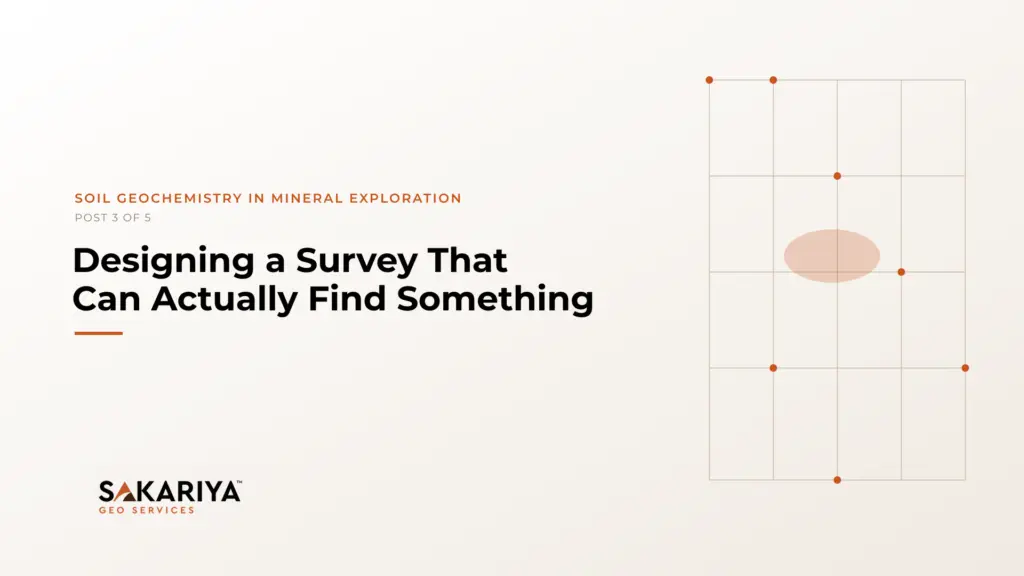
The survey that was designed to fail Picture a narrow gold vein, five meters wide, sitting under a reconnaissance grid with lines 500 m apart and samples every 100 m. The probability of a single sample landing on that vein is close to zero — not because the crew did anything wrong in the field, […]
Which Horizon? Getting Sample Depth Right in the Field
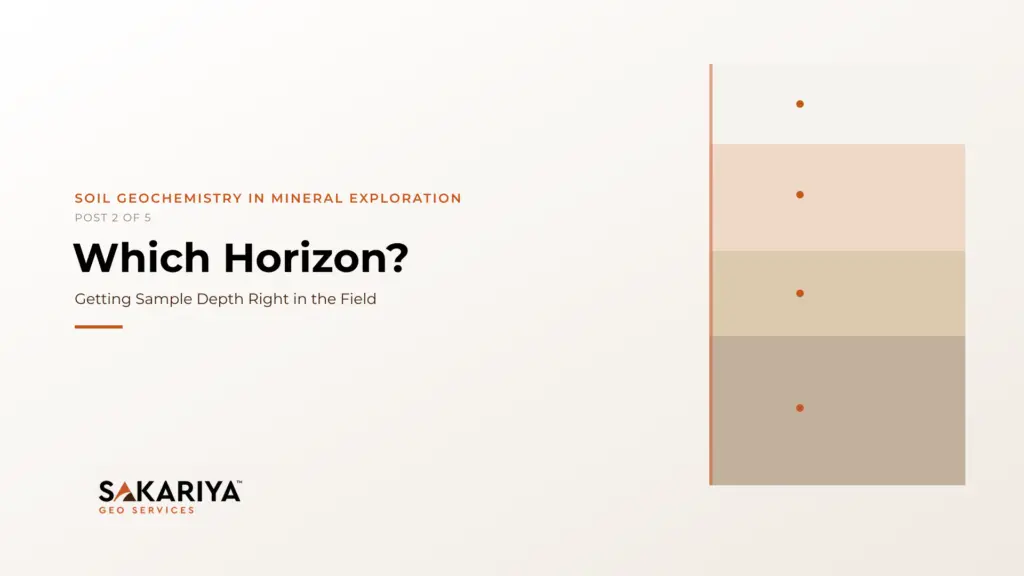
The question that gets asked too late Ask most field crews why they’re sampling the B horizon and you’ll often get the same answer: “that’s what we always do.” It’s a reasonable default — but it’s a default, not a rule. And on a new project, in unfamiliar terrain, that default can be exactly the […]
The Hidden Chemistry: Weathering, Mobility & Pathfinder Elements
The deposit that hides its own commodity Here’s a scenario that surprises people outside exploration geology: soil directly above a real gold deposit can show a weak, barely-detectable gold anomaly — while arsenic, sitting in the same soil, shows a strong and unmistakable one. The gold is genuinely there. It’s just chemically stubborn about showing […]
Anomaly or Deposit? The Question Every Soil Sample Answers
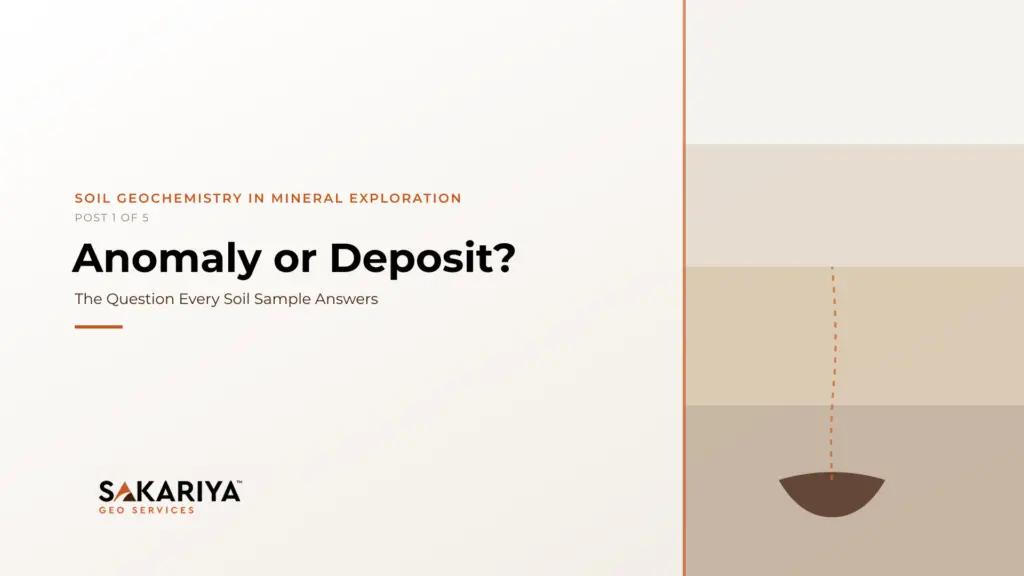
Cold open: 300 ppm Cu. Now what? A soil sample comes back from the lab at 300 ppm copper. Background for the area is 50 ppm. Six times background — exciting number on a spreadsheet.But here’s the question every exploration geologist has to sit with before getting excited: does this number mean there’s ore in […]
From Numbers to Drill Targets: QA/QC and Reading Real Anomalies
The dataset that was perfect and still wrong It’s possible to run a geochemical survey with flawless precision, clean blanks, spot-on standards, and tight duplicates — and still drill a hole that finds nothing. Statistics can confirm that a dataset is trustworthy. They cannot tell you what the numbers actually mean geologically. That gap between […]